

A dull knife turns an onion into a slippery fight. A poorly balanced blade crushes tomatoes, tears herbs, and makes simple prep feel slow. Premium kitchen knives change that equation with sharper edges, stronger materials, and the control to cut cleanly through real kitchen work.
They are not status pieces meant to sit untouched on a magnetic rack. The right knife is a workhorse: fast through dense squash, precise around fish bones, confident on a thick steak, and controlled when the task calls for fine julienne. But premium does not mean one blade, one steel, or one price point. It means buying a tool built for the way you cook and maintaining it well enough to keep delivering.
What Makes Premium Kitchen Knives Different?
The difference begins at the edge. A quality knife takes a finer, more stable edge than a cheap, soft blade, so it bites into food instead of sliding across it. That means less pressure, cleaner surfaces, and better control. You will notice it immediately when slicing ripe tomatoes, trimming silver skin, or cutting herbs without bruising them into a wet pile.
Steel is a major part of that performance, but it is not the whole story. High-carbon stainless steel is popular because it balances sharpness, corrosion resistance, and practical maintenance. Carbon steel can take a wicked edge and develops character with use, yet it demands discipline: wash it, dry it promptly, and accept that a patina will form. Ceramic stays sharp for a long time and is exceptionally light, but it is not the blade for twisting through joints, frozen food, or hard squash.
Construction matters just as much. Layered Damascus steel can bring visual depth and serious cutting capability when the core steel and heat treatment are done right. Hand-forged blades often carry more individuality, weight, and raw character. A dependable stainless workhorse may look less dramatic, but it can be the smarter choice for a busy kitchen where the knife will see daily vegetables, proteins, and cleanup.
Then there is geometry. Blade thickness, grind, tip shape, and curve determine how a knife moves through food. A thin blade glides through onions and boneless meat with low resistance. A heavier cleaver has the authority for dense produce and larger cuts. Neither is automatically better. The right choice depends on what lands on your cutting board.
Choose the Blade for the Job
A premium knife collection does not need to be oversized. It needs to cover your actual cooking. Most home cooks can do serious work with a chef knife, a smaller utility or paring knife, and a bread knife. Add specialized tools when your habits justify them, not simply because the profile looks impressive.
The chef knife: the daily engine
An 8-inch chef knife is the classic all-around blade for chopping, slicing, mincing, and portioning. Its curved edge supports a rocking motion, while its length gives you room to process a pile of vegetables without constantly repositioning ingredients. If your kitchen is compact or your hands are smaller, a 6-inch option can feel quicker and more controlled.
Look for balance before chasing blade length. A knife should not pull aggressively toward the tip or feel like a club at the handle. The best fit feels stable in a pinch grip, with enough blade height to keep your knuckles clear of the board.
Santoku and nakiri: vegetable precision
A santoku is flatter than a Western chef knife and excels at push cuts, quick slicing, and clean vegetable prep. It is a strong choice for cooks who prefer a lighter, more direct motion rather than a pronounced rocking action.
For vegetable-heavy cooking, a nakiri is even more specialized. Its tall, flat blade makes fast, accurate contact with the cutting board, and the squared profile moves through cabbage, carrots, and herbs with purpose. It is not the ideal tool for carving a roast or working around bones, but for produce, it is brutally efficient.
Cleavers: force with control
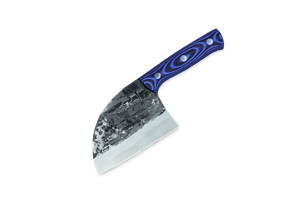
Not every broad blade is a bone cleaver. A Chinese-style vegetable cleaver can be thin, nimble, and excellent for slicing and scooping ingredients. A Serbian-style or Blacksmith cleaver is usually heavier, built with more muscular presence for serious chopping and meat prep. Use the blade that matches its intended work.
A heavy cleaver can feel unstoppable through firm produce and large cuts of meat, but weight is a trade-off. It may fatigue a cook who spends an hour on fine prep. It also requires controlled technique. Power without accuracy is just noise on a cutting board.
Bread, slicing, and fish knives
A serrated bread knife protects crusty loaves and delicate cakes from being crushed. Its teeth saw cleanly through hard crusts, where a straight edge can skid or compress the interior.
A long slicing knife earns its place if you roast, grill, or smoke meat. The narrow blade makes fewer passes through a brisket, turkey, or rib roast, helping preserve juices and creating cleaner presentation. For fish, a flexible fillet knife follows bones, while a yanagiba is designed for long, confident sashimi cuts. A deba is thicker and more powerful, suited to breaking down fish rather than paper-thin slicing.
Steel and Handle: Buy for Real Life
Premium kitchen knives should fit your maintenance habits, not your ambitions on purchase day. If you want a low-fuss blade that handles acidic ingredients and occasional delayed cleanup, stainless steel is the practical call. If you enjoy the ritual of drying, oiling, sharpening, and watching a blade develop a lived-in finish, carbon steel delivers an edge with serious bite.
Handle material changes the experience too. Wood offers warmth, grip, and a crafted look that pairs naturally with hand-forged or Damascus blades. It needs sensible care and should never sit in a dishwasher. Resin, composite, and stainless handles can be easier to maintain and often suit a more modern kitchen.
Do not judge comfort from appearance alone. A handle should fill your hand without forcing your wrist into an awkward angle. Sharp edges on the spine or heel can become irritating during long prep sessions. If a knife feels unstable or uncomfortable after a few minutes, its premium materials will not rescue it.
Sharpness Is a System, Not a One-Time Feature
A factory edge is only the beginning. Even excellent steel loses sharpness with use, and the worst thing you can do is wait until the knife is fully dull. That is when cooks press harder, lose control, and damage both food and fingers.
Honing and sharpening are different jobs. A honing rod helps realign an edge that has bent slightly through normal use. It does not remove enough metal to restore a truly dull blade. Sharpening with a whetstone or a quality sharpener rebuilds the edge itself. How often you sharpen depends on steel, usage, cutting surface, and technique, but a knife that struggles with tomato skin is asking for attention.
Protect the edge between sessions. Use wood or quality composite cutting boards, not glass, marble, or ceramic. Hand-wash knives with mild soap, dry them immediately, and store them where blades cannot knock against other utensils. A magnetic holder, knife block, blade guard, or fitted stand is not just about organization. It prevents needless edge damage.
Build a Set That Works Hard
A large knife block can look impressive, but it is often better to begin with a focused set and add blades as your cooking expands. A chef knife or santoku, paring knife, and serrated bread knife cover most homes. Add a slicer for grilling, a cleaver for heavier prep, or a fish knife when those jobs become frequent enough to deserve a dedicated tool.
For gift buyers, this is the smarter way to think as well. Choose a set around the recipient's cooking style. A confident griller will value a strong chef knife and slicer. A home cook who lives on vegetables may get more use from a santoku or nakiri. Someone fascinated by Japanese technique may appreciate the precision of a yanagiba, but only if they will actually use it.
SAMURA builds this kind of choice into its range, from practical stainless workhorses to expressive Damascus and hand-forged blades with serious workshop character. The point is not to own every profile. It is to put the right cutting power in your hand.
A premium knife earns its place one clean cut at a time. Choose the blade that matches your prep, treat its edge with respect, and it will make every meal feel less like a chore and more like craft.


Leave a comment