

A good Serbian cleaver for meat earns its space the first time you break down a thick pork shoulder, portion chicken thighs, or turn a pile of steak trimmings into clean, even cuts. It carries more authority than a standard chef knife, but it is not a blunt-force tool. The right one combines a wide, hand-forged-style blade, a sharp cutting edge, and enough forward weight to make serious protein prep feel controlled rather than exhausting.
For grillers, frequent home cooks, and anyone tired of lightweight knives skating across dense ingredients, this blade profile brings real kitchen muscle. It can handle meat with confidence, then move directly into garlic, onions, herbs, and sturdy vegetables without demanding a knife change every few minutes.
What Makes a Serbian Cleaver for Meat Different?
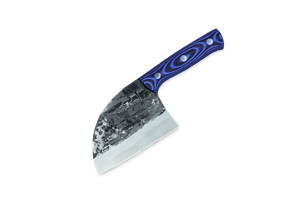
A Serbian cleaver is often recognized by its tall, broad blade and a deep curved belly leading toward the tip. It has the bold silhouette of a butcher's cleaver, yet its edge geometry and overall balance make it far more versatile than a traditional square bone cleaver. Think of it as a powerful kitchen workhorse designed for cutting, slicing, rocking, and scooping.
The blade's height matters. It gives your knuckles clearance when chopping and creates a broad surface for transferring food from cutting board to pan. The extra steel also adds stability through dense cuts. Instead of forcing a narrow blade through a large roast or a thick-skinned squash, you let the knife's weight and sharp edge do the work.
That distinction is critical. A Serbian-style cleaver should be sharp enough to slice rather than simply smash. It is built for raw and cooked meat, trimming fat, portioning boneless cuts, chopping herbs, and managing substantial prep. It may handle small joints or light cartilage depending on the blade's construction, but it is not automatically a replacement for a dedicated heavy bone cleaver.
The Meat Jobs It Handles Best
This is the knife to reach for when your prep has scale. A standard chef knife can trim a steak, of course, but a Serbian cleaver gives you more purchase over a brisket, rack of ribs, pork butt, or whole chicken. Its wide face keeps the blade steady, while the curved edge supports a firm rocking cut through vegetables, aromatics, and herbs for marinades or rubs.
For boneless beef, it excels at portioning strip steaks, slicing flank steak, cutting stew meat, and separating fat caps with deliberate strokes. With pork, it makes short work of shoulder, belly, chops, and thick bacon slabs. When prepping poultry, use it for splitting chicken breasts, trimming thighs, cutting wings at the joints, and chopping cooked chicken for tacos or stir-fries.
It also shines after the meat is cooked. A wide, sharp blade can slice smoked tri-tip, carve a roast, or portion a grilled tomahawk after the bone has been avoided. The key is to use long, decisive cuts instead of sawing. That protects the crust on grilled meat and leaves cleaner slices on the board.
The broad blade earns its keep in the supporting work too. Crush garlic with the flat, scoop chopped onions and peppers, mince parsley, then return to the protein without breaking rhythm. This is why a well-made Serbian cleaver feels so satisfying in a busy kitchen: it has a brutal character, but it is not a one-task tool.
Power Does Not Mean Bone-Chopping Freedom
The biggest mistake with this blade style is treating every large knife as a bone axe. Blade thickness, steel hardness, and edge angle all affect what it can safely do. A thin, hard, ultra-sharp edge delivers excellent slicing performance but can chip if driven into hard bones, frozen food, or a glass cutting board.
Use the cleaver around joints, not straight through heavy weight-bearing bones. Find the natural separation point in a chicken or use a dedicated butcher tool when a cut demands force. For frozen meat, let it thaw first. Those habits preserve the edge and make prep safer.
The cutting board matters just as much. End-grain wood, quality hardwood, or a forgiving plastic board protects your knife far better than marble, ceramic, or glass. A premium blade should meet food, not stone. The edge will stay sharper longer, and your cuts will feel smoother.
How to Choose the Right Serbian Cleaver
Start with balance rather than sheer size. A large blade should feel planted but not clumsy. When held with a pinch grip near the blade and handle junction, it should not pull your wrist hard toward the tip or feel dead at the handle. Forward weight is useful for momentum, but control remains the priority.
Blade length depends on your board space and what you cook. A compact Serbian cleaver is easier to control in apartment kitchens and works beautifully for everyday chopping. A longer blade gives more reach for bigger cuts of meat and larger batches, but it needs a generous board and a confident hand.
Steel choice comes down to maintenance habits. Carbon steel can take a fierce edge and develops a lived-in patina over time. It asks more of its owner: wash it by hand, dry it immediately, and do not leave it wet after cutting acidic foods. Stainless steel is the more forgiving daily driver. It resists corrosion better and suits cooks who want high performance with less maintenance.
Handle shape is not decoration. Look for a secure grip that fills your hand without forcing it into one position. Wood brings warmth and workshop character, while composite and modern materials often offer greater resistance to moisture. If possible, judge the knife by how it feels during a simulated chopping motion, not just how it looks in a product photo.
A SAMURA Serbian-style cleaver is a strong fit for cooks who want that forged, powerful profile while still expecting a practical edge for daily meal prep. The point is not to own the biggest blade in the drawer. It is to own a blade that makes your usual work faster, cleaner, and more enjoyable.
Use the Blade With Deliberate Technique
A Serbian cleaver responds best to a stable cutting station. Set the board on a damp towel so it cannot slide, stand with your shoulders square to the work, and keep your non-knife hand in a claw grip. Start with the heel of the blade for dense cuts, then follow the curve forward as the knife moves through the ingredient.
For diced meat, slice strips first, rotate them, and cut across with measured downward strokes. Do not lift the knife excessively high. Its weight supplies enough force without a dramatic swing. For herbs and garlic, keep the tip or front belly in light contact with the board and use a controlled rocking motion.
The broad face is useful for moving ingredients, but do not scrape the cutting edge sideways across the board. Turn the knife and use the spine or flat of the blade to gather food. It is a small habit that prevents needless dulling.
Keep the Edge Ready for Real Work
A cleaver that looks hand-forged still needs disciplined care. Wash it soon after use with warm water and mild soap, then dry it completely. Avoid the dishwasher. Heat, detergent, hard contact with other utensils, and extended moisture are a bad combination for any quality knife, especially carbon steel.
Hone the edge regularly with a suitable honing rod if your blade steel and edge type call for it. Honing realigns a slightly rolled edge; it does not replace sharpening. When the knife begins to slip on tomato skin or requires more pressure through meat, sharpen it with a whetstone or a sharpening system designed for kitchen knives. A few careful passes at the correct angle are better than aggressive grinding.
Store the blade where it cannot strike other metal. A magnetic holder, knife block, blade guard, or dedicated drawer organizer protects both the edge and your fingers. Give a carbon-steel blade a light coat of food-safe mineral oil before long storage, particularly in humid kitchens.
A Serbian cleaver rewards good habits with years of hard service. Put it on a stable board, keep the edge sharp, respect its limits around hard bone, and let its weight turn demanding meat prep into clean, confident work.


Leave a comment