
Knife guide
Knives by type
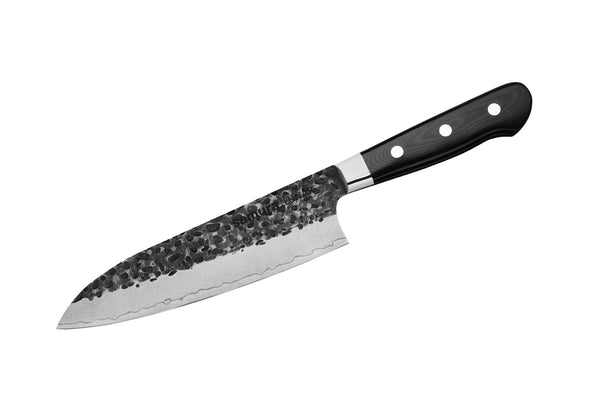
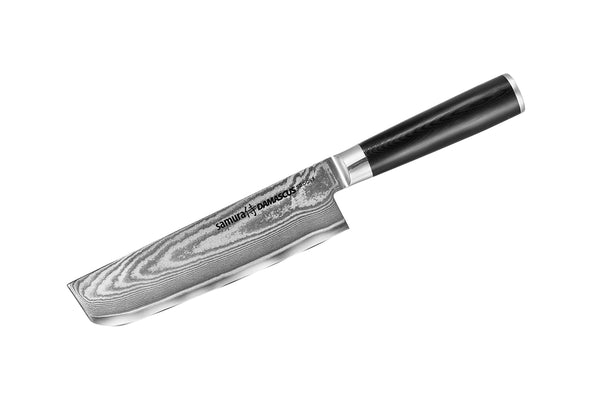
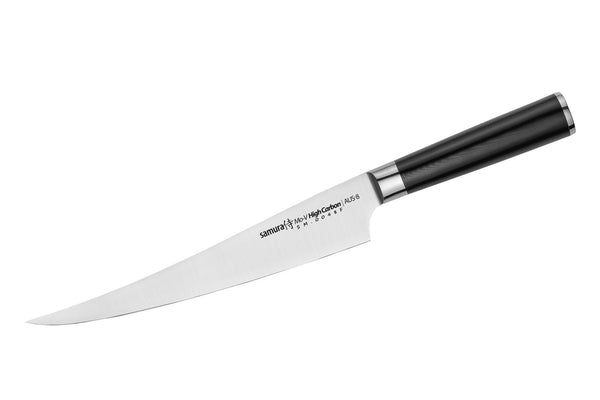
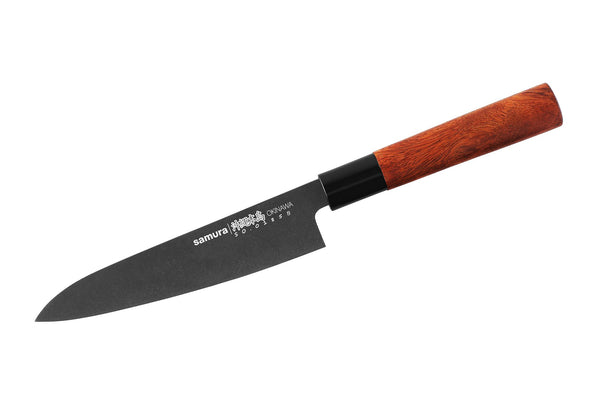
Explore knives grouped by blade style and functionality — from classic chef knives and santoku to utility and specialty designs crafted for different cutting techniques.





How to choose
Four steps to the right knife
-
Start with what you cook most
Meat: a chef's knife or slicing knife. Vegetables: a santoku or nakiri. Fish: a fillet knife or yanagiba. Bread: a serrated bread knife.
-
Choose the length
About 200 mm or more for large produce and roasts, 150–180 mm for most home kitchens, under 130 mm for peeling and small work.
-
Choose the steel
Compare the steelsAUS-8 is hard-wearing and easy to sharpen. AUS-10, VG-10 and Damascus are harder, 59–61 HRC, and can take a finer edge.
-
Plan the care
Sharpening toolsA whetstone and a wooden or plastic board keep any edge sharp for years. Each product page shows a care kit matched to its steel.

About SAMURA
Japanese knife making, designed for everyday cooking
Founder and designer Alexey Yakovlev started SAMURA in 2003, inspired by Japanese culture and traditional blades. Every series begins as a hand sketch and pairs Japanese-grade steel, hardened to 58–61 HRC, with a handle shaped for daily use. Today SAMURA knives are sold in more than 1,000 stores.
Why choose SAMURA
Four reasons to choose SAMURA
-
Ultra-sharp from the first cut
Steel guideJapanese-grade AUS-8, AUS-10, VG-10 and Damascus steels, hardened to 58–61 HRC and sharpened to a razor-sharp, precise edge.
-
Premium quality, fair price
All seriesThe steel, finish and design of high-end Japanese-style knives without the luxury mark-up: a premium knife you can use every day.
-
Packaged to be given
Premium SAMURA packaging makes every knife and set a ready-made gift for anyone who loves to cook.
-
Build your own collection
Every series offers matching knives for every task. Complete one series or combine your favourites across collections.
What is the difference between a chef's knife and a santoku?
A chef's knife has a curved edge for rocking cuts and is usually longer. A santoku has a flatter edge for push cuts and chopping. Both are all-rounders for meat, fish and vegetables.
What is a nakiri used for?
A nakiri has a straight, squared blade made for vegetables: the flat edge meets the board along its whole length for clean, even chopping.
What is a gyuto?
A gyuto is the Japanese version of the chef's knife: a slightly lighter, thinner blade with a pointed tip, used for meat, fish and vegetables.
Which knife is best for meat?
A chef's knife for preparation, a slicing knife for carving and portioning, a boning knife to work around bones and a cleaver for heavy cuts.
Which knife is best for fish?
A flexible fillet knife for filleting, a deba for heads and bones, and a long yanagiba for slicing raw fish.
Which three knives make a good basic set?
A chef's knife or santoku, a utility knife and a paring knife cover most everyday work. Many SAMURA series offer exactly this as a 3-piece set.
- Razor-sharp precision from the very first cut.
- Free shipping from €79
- 14-day returns
- 2-year legal guarantee
- Secure payment