

A knife can feel decisive the moment it meets a ripe tomato, a thick-cut steak, or a pile of winter squash. That is where the forged versus stamped knives debate gets real. One blade may bring heavy, planted authority to the board; another may move faster through a mountain of vegetables without tiring your wrist. Neither construction wins every kitchen. The right choice depends on how you cut, what you cook, and what you expect from a blade after years of hard work.
Forged Versus Stamped Knives: The Real Difference
A forged knife begins as a piece of steel that is heated and shaped under force. The blade is formed through pressing, hammering, or other forging processes, then ground, heat-treated, and finished into its final profile. Traditional forging has a workshop-built character, and it often produces a thicker, more substantial blade with a strong transition from blade to handle.
A stamped knife is cut from a flat sheet of steel, usually by machine. It is then heat-treated, ground, sharpened, and fitted with a handle. “Stamped” does not mean flimsy, cheap, or dull. It describes how the steel starts its journey, not the quality of the finished edge.
That distinction matters. A well-designed stamped knife made from good steel and heat-treated correctly can be an excellent daily cutter. A poorly made forged knife can still be thick behind the edge, uncomfortable in the hand, and disappointing on food. Construction is one part of performance, not a shortcut to judging the whole knife.
What Forged Knives Bring to the Board
Forged blades are built for cooks who enjoy a knife with presence. They often have more mass through the spine and handle area, which can make a chef knife, cleaver, or meat-focused blade feel stable when pushing through dense ingredients. That weight can be useful when breaking down large vegetables, portioning proteins, or working through firm root crops.
Many forged knives also use a full tang, meaning the steel extends through the handle. This can improve balance and give the knife a confident, unified feel. Some models include a bolster, the thicker section between blade and handle. A bolster can protect fingers and add control, though it may make sharpening the full length of the edge more difficult if it extends all the way to the heel.
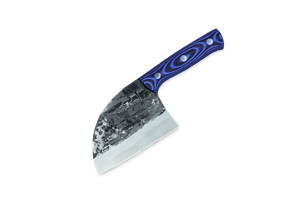
The appeal is not only physical. Forged construction suits knives meant to show their muscle: blacksmith-style chef knives, Serbian cleavers, heavy utility blades, and powerful slicing tools. When the blade geometry is right, a forged knife combines cutting force with a durable, workshop-made personality.
Still, more weight is not automatically more control. A heavy knife can become tiring during long prep sessions, especially for cooks with smaller hands or anyone who prefers fast, precise slicing. A forged knife should feel balanced, not like it is asking your wrist to carry it.
Does Forging Make Steel Better?
Forging can refine and shape steel during manufacturing, but the final result depends heavily on the steel itself, heat treatment, blade grind, and quality control. Those factors determine how hard the blade can be, how long it holds an edge, how tough it is under stress, and how easily it sharpens.
In practical kitchen use, edge geometry matters more than the marketing story around a manufacturing method. A thin, well-ground blade will pass through an onion with less resistance than a thick blade, whether it began as forged stock or stamped sheet steel. Look at the whole build, not one label on the box.
Why Stamped Knives Are Serious Kitchen Tools
Stamped knives are usually thinner and lighter than their forged counterparts. That is a major advantage for everyday prep. A light chef knife can move quickly through herbs, celery, peppers, and boneless proteins. A thin stamped slicer can make clean, controlled cuts without crushing delicate food.
Because stamping is efficient, manufacturers can put strong stainless steel, precise heat treatment, and clean blade geometry into a knife at a more accessible price. This makes stamped knives a smart entry point for new cooks building a first serious set. It also makes them practical for experienced cooks who want specialized tools without loading every drawer with heavyweight blades.
A stamped blade is often easier to maneuver for detail work. Think of trimming silver skin, mincing garlic, slicing fruit, or making long strokes through fish. In these jobs, low weight can feel like speed rather than compromise.
The trade-off is that very light knives may not feel as planted when cutting hard produce or thick cuts of meat. They can also flex more if the blade is especially thin and long. Flex is useful in a fillet knife, where the blade needs to follow bones and skin. It is less desirable in a general-purpose chef knife meant to handle squash or a dense cabbage.
Balance, Grind, and Steel Matter More Than Labels
If you are choosing between two knives, do not stop at forged or stamped. Pick up the knife, or study the product specifications closely, and focus on the features that shape daily performance.
A blade’s balance point changes how it behaves. A forward-balanced knife gives more cutting momentum and can feel powerful in a rocking chop. A neutral or handle-balanced knife often feels agile and precise. Neither is universally better. The best balance is the one that lets you work without gripping too tightly.
Then consider the grind. A thin edge slices efficiently, but it needs respectful use. It should not be twisted through bones, used on frozen food, or slammed against glass cutting boards. A thicker edge may tolerate harder work, but it can wedge in carrots, potatoes, and onions if the blade is too thick behind the sharpened edge.
Steel determines much of the maintenance experience. Stainless steel is practical for busy kitchens because it resists staining and corrosion. High-carbon steel can take a fierce edge and develop character over time, but it needs to be washed, dried, and stored with more discipline. Damascus cladding can add striking visual depth and support a layered construction, yet it is the core steel and heat treatment that do the real cutting work.
Which Knife Construction Fits Your Cooking?
Choose a forged knife if you want a substantial all-purpose chef knife, a hard-working cleaver, or a blade that feels solid during heavier prep. It is a strong choice for grillers who portion meat, cooks who regularly tackle large vegetables, and anyone who values a bold, craft-forward tool with real weight in hand.
Choose a stamped knife if you want speed, lower weight, and excellent value. It is ideal for everyday vegetables, boneless proteins, lunch prep, and longer cooking sessions where wrist fatigue matters. A stamped utility knife, santoku, slicer, or flexible fillet knife can become one of the most-used tools in the kitchen.
Many serious home kitchens benefit from both. Use a forged chef knife or cleaver as the muscle for demanding work, then reach for a lighter stamped knife when precision and pace matter. This is not duplication. It is building a sharper tool kit for different ingredients.
Care Determines How Long Either Knife Performs
A premium knife does not stay ultra-sharp by accident. Forged and stamped blades both need the same disciplined basics: hand wash, dry immediately, use a wood or quality plastic cutting board, and store the edge where it will not strike other tools. A magnetic holder, blade guard, or proper knife block protects more than appearance. It protects the edge you rely on.
Use a honing rod when the edge feels slightly off-center but is not truly dull. Hone lightly and consistently rather than aggressively. When the knife starts tearing tomato skin or slipping on onion skin, sharpen it with a whetstone or a suitable sharpener. Carbon steel deserves extra attention because moisture can cause discoloration or rust, but stainless steel also benefits from being dried instead of left in a wet sink.
The better question is not whether forged or stamped knives are superior. Ask which blade makes you want to cook more confidently. Choose the knife that feels controlled in your hand, matches the food on your board, and earns its place every time you make the first cut.


Leave a comment