

A ripe tomato should not survive a knife test by collapsing under pressure. It should split cleanly under a controlled forward stroke, with no crushing and no sawing. That is where carbon steel knives earn their reputation. They take a frighteningly fine edge, respond fast on a whetstone, and give everyday prep a more direct, connected feel.
They are not maintenance-free tools, and that is the point. A carbon blade asks you to pay attention: wipe it down, dry it after use, and learn what a sharp edge actually feels like. In return, you get cutting performance with real character - from paper-thin vegetable slices to confident work through dense squash, herbs, meat, and fish.
Why Carbon Steel Knives Cut Differently
Carbon steel contains more carbon than typical stainless kitchen steel and usually less chromium. That composition allows the blade to reach high hardness and form a very refined edge. The practical result is simple: less force is needed to start and finish a cut.
A sharp carbon steel chef knife glides through onions instead of pushing layers apart. A properly profiled slicer tracks cleanly through a roast. On a compact utility knife, the edge has enough bite for citrus, tomatoes, shallots, and delicate garnish work. The blade does not do the cooking for you, but it removes the drag that makes prep feel slow and clumsy.
Edge retention is a major part of the appeal. Many carbon steels stay sharp through long prep sessions, especially when used on wood or quality composite cutting boards. When the edge finally needs attention, carbon steel is generally more responsive to sharpening than highly wear-resistant stainless alloys. A few disciplined passes on a whetstone can bring back a clean, aggressive edge.
That does not mean every carbon blade is automatically better than every stainless blade. Heat treatment, grind, blade geometry, and your cutting habits matter just as much. A well-made stainless workhorse can be the smarter choice for a busy household. Carbon steel is for cooks who want maximum feedback, a highly refined edge, and a tool that develops with use.
Carbon Steel vs. Stainless Steel in a Real Kitchen
The trade-off is corrosion resistance. Stainless steel contains enough chromium to resist staining and rust under normal kitchen conditions. Carbon steel is more reactive. Leave it wet beside the sink, store it with food residue on the blade, or cut acidic ingredients and walk away, and discoloration can arrive quickly.
That sensitivity sounds dramatic, but the routine is straightforward. Wash the knife by hand with mild soap when needed, wipe it dry immediately, and store it in a dry place. Do not leave it soaking in a sink, run it through a dishwasher, or put it away wet in a closed drawer. Those habits are hard on any quality knife, but carbon steel punishes them faster.
Acidic foods such as lemons, tomatoes, onions, vinegar, and fruit can darken the blade. This is often the start of a patina: a gray, blue, black, or bronze-toned layer that forms as the steel reacts. A stable patina is not rust. It is part of the blade's working finish and can provide some protection against further reaction.
Active rust is different. It tends to look orange or reddish, feel rough, and spread if ignored. Remove it early with a suitable rust eraser or fine abrasive, then wash, dry, and lightly oil the blade before storage. The goal is not to keep a carbon knife looking factory-new forever. The goal is to keep the steel clean, dry, sharp, and ready for work.
The right choice depends on your habits
Choose carbon steel if you enjoy maintaining your equipment, cook often, and want a blade with serious edge performance. It makes particular sense for enthusiasts who sharpen at home and want to feel the difference between a merely sharp knife and a truly tuned one.
Choose stainless steel if several people use the kitchen, cleanup is rushed, or you need a knife that can handle neglect without consequences. There is no weakness in choosing the tool that fits your routine. The best knife is the one that stays sharp, safe, and in active use.
Which Carbon Steel Knife Belongs on Your Board?
Start with the job, not the collection. A chef knife is the strongest first move for most kitchens because it handles the widest range of ingredients. Its curved edge supports rocking cuts for herbs, while the heel has enough authority for firm vegetables and larger proteins. If you want one blade for daily prep, this is the true workhorse.
A santoku offers a flatter cutting edge and a compact, agile profile. It is a strong match for cooks who prefer push-cutting through vegetables, boneless proteins, and precise ingredient prep. The shorter blade can feel more controlled in a smaller kitchen or on a crowded cutting board.
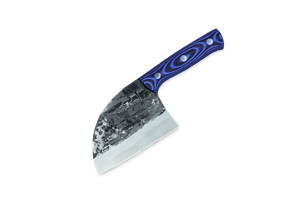
For protein-heavy cooking, a carbon steel cleaver or Serbian-style chef knife brings brutal character and useful momentum. These broad blades are built for forceful slicing, portioning, and transferring ingredients from board to pan. They are not automatically bone choppers, however. Use the knife within its intended purpose. Hard bones, frozen food, and twisting cuts can chip even a powerful hardened edge.
A sujihiki or slicing knife is made for long, clean draw cuts through cooked meat, large fish, and roasts. Its narrow profile reduces friction and helps preserve a smooth surface on every slice. If presentation matters at the table, a dedicated slicer is not a luxury purchase. It is the blade that stops you from shredding a beautiful result at the final moment.
For fish work, specialized Japanese-inspired profiles demand a little more skill but pay back in precision. A yanagiba excels at long sashimi cuts, while a deba is designed for fish breakdown and controlled work around bones. These are purpose-built tools, not substitutes for a general chef knife.
How to Care for a Carbon Blade Without Making It a Chore
The best maintenance routine happens in seconds. After cutting, wipe the blade with a damp cloth, then dry it fully with a towel. When working through acidic ingredients for an extended period, pause to wipe the knife between tasks. This small habit keeps reactive marks from becoming a cleanup project.
Use a wooden or quality plastic cutting board. Glass, marble, ceramic plates, and stone counters destroy a fine edge quickly. Carbon steel can be hard, but hardness does not make an edge invincible. The thinner and sharper the edge, the more it benefits from a forgiving surface and clean cutting technique.
Honing and sharpening are not the same. A honing rod can help realign a slightly rolled edge on some knives, but it does not replace sharpening. When the knife begins to slide on tomato skin or needs extra pressure through an onion, use a whetstone. Follow the angle appropriate to the blade, keep the stone lubricated as directed, and work both sides evenly. Consistent technique beats aggressive grinding.
For longer storage, apply a very light coat of food-safe mineral oil to a clean, dry blade. Keep the knife in a sheath, knife block, drawer insert, or on a magnetic holder where the edge cannot strike other utensils. A premium blade should never rattle loose in a drawer with spoons and peelers.
The Patina Is Part of the Story
Mass-market kitchen knives are designed to disappear into the background. Carbon steel does the opposite. Its surface records use, its edge rewards skill, and its maintenance becomes part of the cooking rhythm. That evolving finish is not a flaw to hide. It is proof that the knife is earning its place on the board.
Give a carbon blade dry storage, a proper cutting surface, and regular stone work, and it will return the favor every time dinner starts with the first cut.


Leave a comment