
Guides and tips
Knife guide
Practical guides from SAMURA: how to choose the right knife, which steel suits you, and how to keep every edge razor-sharp for years.
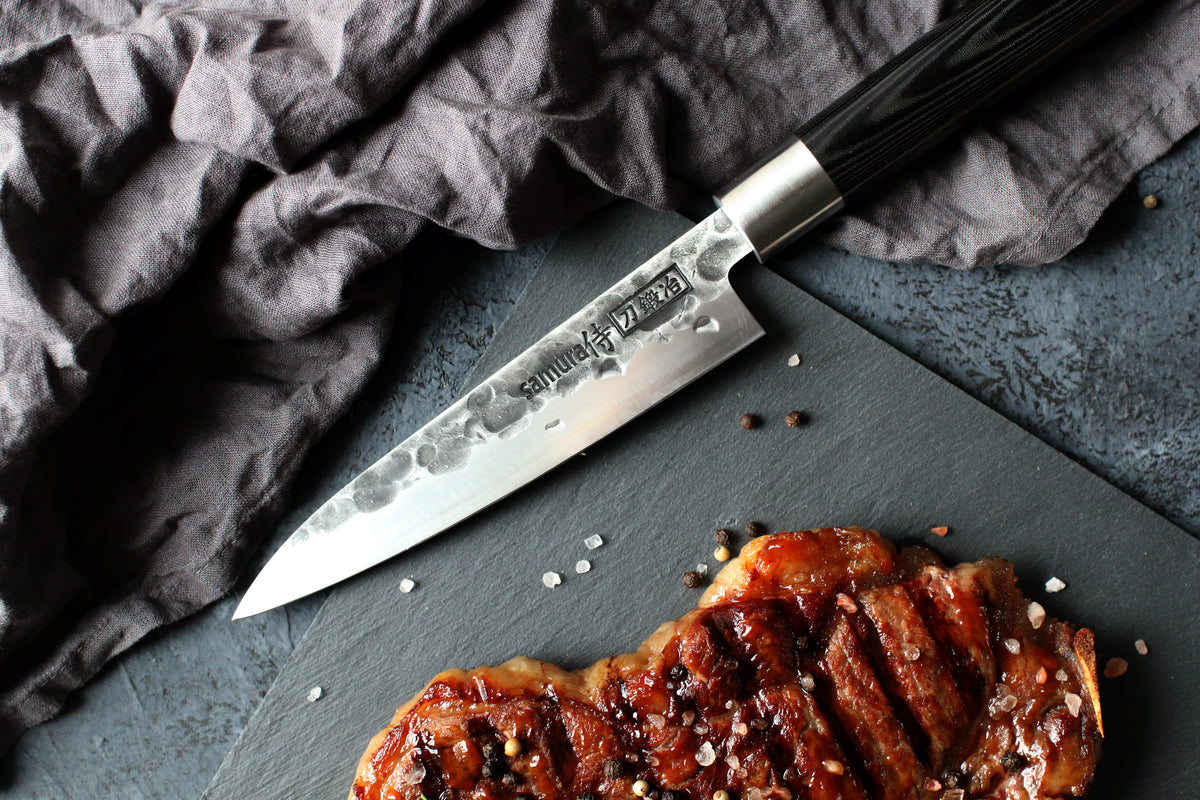

How to Strop a Knife for a Razor-Sharp Edge: Leather, Newspaper or a Fine Stone

Single Bevel Knife vs Double Bevel: What the Edge Grind Means for You

How to Cut an Onion: Dice, Slice, Strips, Rings and Wedges (Without Crying)

How to Use a Carving Fork: Hold, Carve and Serve a Roast

How to Hold a Knife: Pinch Grip, Claw Hand and Safe Cutting

Samura Okinawa Review: Rosewood Handles, AUS-8 Blades and Who the Line Suits

Y-Peeler vs Straight Peeler: Which Vegetable Peeler Should You Choose?

What Is Cutlery? Meaning, Flatware and Where Kitchen Knives Fit

Culinary Knife Set: What a Culinary Student or New Cook Actually Needs

Serbian Boning Knife: What the Name Means and What It Can Do

Japanese Knife Set: Which Knives Belong in It and What to Look For

Knives for Kids: How to Choose a First Kitchen Knife

Samura Meteora Review: VG-10 Damascus Knives With an All-Metal Design

Samura Mad Bull Review: Serbian Chef's Knife and Mini Cleaver Compared

Types of Kitchen Knives: What Each One Is For (With Blade Lengths)

What Are the Best Kitchen Knife Brands? How to Judge Any Knife Brand
Guides
Choose with confidence
-
Knives by type
Explore the typesChef's knife, santoku, nakiri, slicer, cleaver and more: what each shape does best.
-
Knives by use
Choose by useFind the right knife for meat, fish, vegetables, bread or steak.
-
Steel guide
Compare the steelsAUS-8, AUS-10, VG-10, Damascus and ceramic compared: hardness, care and sharpening.
-
All collections
See all collectionsEvery SAMURA series, set and accessory in one overview.

Why SAMURA
High-end Japanese-style knives for everyday cooking
Since 2003 SAMURA has combined Japanese knife making with a designer's eye. AUS-8, AUS-10, VG-10 and Damascus steels, hardened to 58–61 HRC, are paired with handles made for daily use, at prices that make a premium knife an everyday tool.
Why choose SAMURA
Four reasons to choose SAMURA
-
Ultra-sharp from the first cut
Steel guideJapanese-grade AUS-8, AUS-10, VG-10 and Damascus steels, hardened to 58–61 HRC and sharpened to a razor-sharp, precise edge.
-
Premium quality, fair price
All seriesThe steel, finish and design of high-end Japanese-style knives without the luxury mark-up: a premium knife you can use every day.
-
Packaged to be given
Premium SAMURA packaging makes every knife and set a ready-made gift for anyone who loves to cook.
-
Build your own collection
Every series offers matching knives for every task. Complete one series or combine your favourites across collections.
How often should I sharpen my knife?
When it stops slicing cleanly: if it slips on a tomato skin or crushes herbs instead of cutting them, it is time. Regular light sharpening keeps the edge in better shape than rare heavy sharpening.
Which whetstone grit do I need?
Use #1000 to restore the edge and #3000 to refine it. A #8000 stone polishes harder steels such as AUS-10, VG-10 and Damascus. Ceramic blades need a diamond stone.
What does HRC mean?
HRC is the Rockwell hardness scale. SAMURA knives are 58–61 HRC: harder steel can take a finer edge, while slightly softer steel is easier to sharpen and less brittle.
Chef's knife or santoku: which is better?
Both are all-rounders. A chef's knife has a curved edge for rocking cuts and more length; a santoku has a flatter edge for push cuts and chopping. Choose the movement that feels natural to you.
Which cutting board is best for my knives?
Wood or plastic boards, including TPU. Glass, stone and ceramic boards dull any edge very quickly.
Can I cut frozen food or bones?
Use a serrated frozen-food knife for frozen food and a cleaver for bones. Thin Japanese-style blades are made for clean slicing and can chip on hard materials.
- Razor-sharp precision from the very first cut.
- Free shipping from €79
- 14-day returns
- 2-year legal guarantee
- Secure payment