

A kitchen knife set should earn its space every time you prep dinner, break down a chicken, slice a crusty loaf, or carve a smoked brisket. It is not a row of matching handles sitting on the counter. It is your cutting system: the blades you reach for, the edge that determines your control, and the steel that has to take real work without quitting halfway through prep.
The right set makes cooking faster, cleaner, and more enjoyable. The wrong one fills a block with duplicate blades, dull edges, and gimmicks. Choose for the food you make, the way you work, and the level of maintenance you are willing to give your tools.
Start With the Blades You Will Actually Use
A capable set does not need a dozen knives. For most home kitchens, three core profiles carry the workload: a chef knife or santoku for general prep, a utility or paring knife for detail work, and a bread knife for loaves, tomatoes, and delicate-skinned produce. Add a carving or slicing knife if you cook roasts, barbecue, or large fish often.
The chef knife is the true workhorse. Its curved edge supports a rocking motion for herbs and fast vegetable prep, while its broad blade can move chopped ingredients from board to pan. An 8-inch chef knife suits most cooks. A 6-inch version offers more control in a smaller kitchen, while a 10-inch blade gives experienced users serious reach for large produce and proteins.
A santoku takes a different approach. Its flatter edge favors up-and-down chopping and precise slicing. Many cooks like its compact feel, especially when working with vegetables, boneless meat, and fish. It depends on your cutting style: rock-choppers often prefer a classic chef knife, while push-cutters may feel immediately at home with a santoku.
A paring knife handles the jobs that demand fingertip control - peeling apples, trimming strawberries, removing eyes from potatoes, and making small garnishes. A utility knife sits between paring and chef knife sizes and can be useful for sandwiches, citrus, and quick tasks when a full-size blade feels excessive.
Serrated bread knives deserve more respect than they get. A good one cuts through crackling sourdough without crushing the soft center. It also performs brilliantly on ripe tomatoes, cakes, citrus, and foods with a firm exterior and tender interior. Keep one sharp and it will quietly become one of the busiest blades in the drawer.
Kitchen Knife Set Essentials vs. Extra Blades
Once the foundation is covered, choose specialty knives based on your real menu, not an imagined chef’s kitchen. A boning knife is worth it for frequent poultry prep, trimming ribs, or separating meat from bone. A flexible fillet knife gives better control around fish bones and skin. A long slicer or Japanese-style yanagiba creates clean, confident cuts through cooked meats and raw fish.
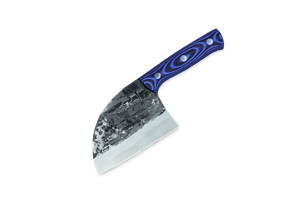
Cleavers are another case where purpose matters. A thin Chinese-style vegetable cleaver can chop, slice, and scoop. A heavier butcher or Serbian-style cleaver brings brutal force to dense vegetables and larger meat tasks. Neither replaces a chef knife for every job, and neither should be used carelessly on hard bones unless the blade is designed for that punishment.
Steak knives can make sense in a larger set if you host often. Otherwise, buying a focused core set and adding steak knives separately may give you more freedom to choose the style, edge, and handle you want. More pieces are not automatically more value. A smaller set of strong, useful blades beats a crowded block of compromises.
Choose Steel for Performance and Care
Steel determines how a knife cuts, how long it stays sharp, how it sharpens, and how much care it demands. There is no single best material. There is only the right trade-off for your kitchen.
Stainless steel is the practical choice for busy cooks. It resists staining and corrosion, handles everyday use well, and asks for straightforward maintenance. Quality stainless blades can take a very sharp edge and provide reliable cutting performance without treating every drop of water like a threat.
High-carbon steel often delivers an exceptionally fine, aggressive edge and a distinctive character that serious knife users love. It also requires discipline. Wash it by hand, dry it immediately, and expect it to develop a patina through use. That changing surface can look powerful and personal, but neglect can turn patina into rust.
Damascus-style layered construction brings visual depth and often pairs a hard cutting core with protective outer layers. The pattern is not a shortcut to quality by itself. What matters is the core steel, heat treatment, blade geometry, and finishing. A beautiful blade still needs a thin, well-ground edge to cut with authority.
Ceramic knives are extremely sharp and excellent for fruits, vegetables, and boneless ingredients. They are also brittle compared with steel. Do not twist them through hard produce, drop them, or use them on bones, frozen food, or hard squash. They are specialists, not all-purpose bruisers.
The Handle Must Fit the Work
A knife can have a fierce edge and still feel wrong in your hand. Before choosing a set, consider handle shape, texture, balance, and blade weight. A handle should give you a secure grip without forcing your wrist into an awkward position.
Wood handles bring warmth, grip, and workshop-level character. They need hand washing and occasional conditioning to stay in fighting shape. Composite and synthetic handles usually tolerate moisture more easily and suit high-volume daily prep. Neither option wins in every kitchen. The better choice is the one that feels stable and controlled when your hands are wet, oily, or moving fast.
Balance matters, too. Some cooks want the weight centered near the bolster for a solid, planted feel. Others prefer a blade-forward knife that lets the edge do more of the work. Heavier hand-forged blades can feel powerful when cutting dense ingredients, but they may fatigue users during extended prep. A lighter Japanese-inspired profile can be fast and precise, though it may feel less forgiving if you use rough technique.
Storage Protects the Edge
A sharp knife loose in a drawer is a damaged edge waiting to happen. It is also a hand injury waiting to happen. A knife block, magnetic holder, blade guards, or a dedicated drawer organizer protects both the blades and the people using them.
Magnetic storage keeps knives visible, dry, and easy to grab, but install it securely and place each knife spine-first against the magnet. Blocks save counter space in some kitchens, though the slots should be clean and dry. If you use a drawer, individual sheaths or guards are non-negotiable.
Cutting boards matter just as much. End-grain wood and quality plastic boards are edge-friendly choices. Glass, marble, ceramic, and granite look polished but punish a fine edge fast. Your board should support the knife, not fight it.
Keep Your Set Sharp, Not Just Shiny
Sharp knives are safer because they bite predictably instead of slipping off food. That does not mean they are harmless. It means you can use controlled pressure rather than forcing a dull blade through an onion or squash.
Honing and sharpening are different jobs. A honing rod realigns a slightly bent edge between sharpening sessions. It does not replace removing metal and creating a fresh edge. Whetstones provide the most control and can produce a seriously refined edge, but they demand practice. Pull-through sharpeners are fast and accessible, though aggressive models may remove more metal than necessary.
For a premium set, use the maintenance method that matches its steel and grind. Hand wash every knife, dry it immediately, and never leave it soaking in a sink or rattling through a dishwasher cycle. A few disciplined minutes protect the cutting power you paid for.
Build a Set With Intent
SAMURA sets can give home cooks a strong starting point, from practical stainless workhorses to expressive Damascus and hand-forged profiles. But the smartest choice is still personal: begin with the blades that match your meals, then add specialized tools when your cooking gives them a real job.
A kitchen knife set should feel ready when the cutting board fills up. Pick blades with purpose, keep the edge tuned, and let every clean cut prove that your kitchen tools are built to work.


Leave a comment