

A dull, poorly balanced knife turns an onion into a slippery fight. A well-chosen blade moves through it cleanly, keeps the slices even, and gives you control from the first cut to the last. The best chef knife is not necessarily the most expensive or the hardest steel on paper. It is the knife that fits your hand, suits your cooking, and stays ready for real work.
For most home cooks, one quality chef knife is the true workhorse of the kitchen. It handles herbs, onions, carrots, boneless meat, garlic, fruit, and most everyday prep without asking you to switch tools. The details decide whether it feels fast and precise or awkward and tiring.
What Makes the Best Chef Knife?
A chef knife earns its place through versatility. Its broad blade gives you knuckle clearance and lets you transfer chopped ingredients from board to pan. The pointed tip handles detailed work, while the curved front section supports a rocking motion for herbs and garlic.
But versatility has limits. A chef knife is not the right choice for splitting bones, prying apart frozen food, or cutting through hard squash with force. Those jobs can chip an ultra-sharp edge or damage the blade. A capable knife should be treated like a cutting tool, not a cleaver or screwdriver.
The best choice comes down to five connected factors: blade length, profile, steel, handle geometry, and weight. No single specification wins for every cook. A light Japanese-inspired blade can feel electric on vegetables; a heavier, more curved chef knife may feel better to someone who uses a classic rocking chop.
Choose Blade Length Before Anything Else
An 8-inch chef knife is the strongest starting point for most American home kitchens. It is long enough to slice large produce, cut through a head of cabbage, and portion proteins in clean strokes, yet short enough to control on a standard cutting board.
A 6-inch blade makes sense for cooks with smaller hands, limited counter space, or a preference for close control. It is nimble for daily prep, although it can feel short when you are cutting wide vegetables or large cuts of meat. A 10-inch knife gives serious reach and speed, but it needs a generous board and confident technique.
Do not choose a longer blade simply because it looks more professional. If the tip hangs over your board or the knife feels difficult to guide, that extra length becomes a liability. The best chef knife should feel like an extension of your hand, not a tool you have to wrestle into position.
Test the Blade Profile in Your Cooking Style
Traditional Western-style chef knives typically have a noticeable belly, or upward curve, toward the tip. This supports a rocking motion: the tip stays near the board while the heel rises and falls. If you mince herbs often or already use this technique naturally, a curved profile will feel familiar.
Japanese-inspired chef knives often have a flatter edge line and a thinner, more precise cutting feel. They reward a push cut or a controlled up-and-down chop. Because more of the edge contacts the board at once, they can be exceptionally efficient on vegetables. The trade-off is that an aggressive rocking motion can feel less natural and may place unnecessary stress on a fine edge.
Neither approach is inherently better. Match the profile to the motion you actually use, not the technique you think you should use.
Steel and Edge: Sharpness Needs a Practical Balance
Steel determines how a knife takes an edge, holds it, resists corrosion, and responds to sharpening. High-carbon stainless steel is a practical choice for most cooks because it combines strong cutting performance with everyday corrosion resistance. It still deserves basic care: rinse it after use, wash by hand, and dry it promptly.
Harder steel can hold a very acute, ultra-sharp edge for longer. That is a major advantage when you value fine slicing and clean cuts through tomatoes, onions, herbs, and proteins. The trade-off is toughness. A hard, thin edge is less forgiving if it hits a bone, a plate, a sink, or a hard cutting surface.
Softer steel is generally easier to sharpen and can tolerate more abuse, but it may need touch-ups more often. For a busy home cook, the ideal answer is often not maximum hardness. It is steel that gives you powerful cutting performance without demanding delicate treatment every time dinner gets hectic.
Edge angle matters too. A narrower edge angle improves slicing ability because it moves through food with less resistance. A slightly wider edge is more durable. If you want the best chef knife for precise daily prep, favor a fine edge and use it correctly. If your kitchen habits are rougher, prioritize durability and commit to regular sharpening instead of expecting one edge to survive everything.
Handle Fit Is Not a Cosmetic Detail
A dramatic blade gets attention, but the handle determines how the knife behaves after 20 minutes of prep. It should allow a secure grip without pressure points, sharp corners, or a slick surface when your hands are damp.
Many cooks use a pinch grip, with the thumb and index finger gripping the blade just ahead of the handle. This gives excellent control over the tip and edge. A chef knife should leave enough room at the bolster or blade heel for that grip without forcing your fingers into an uncomfortable position.
Handle materials also change the experience. Composite and modern polymer handles offer durability, moisture resistance, and consistent grip. Wood can feel warm and distinctive but usually needs more attentive care. What matters most is shape: a handle that suits one cook perfectly may feel too thick, too narrow, or too angular to another.
Weight and balance belong here as well. A blade-forward knife can make chopping feel authoritative and powerful. A neutral or handle-balanced knife tends to feel quick and controlled. There is no correct answer, but fatigue is useful feedback. If you feel like you are lifting the knife rather than guiding it, the fit is wrong.
Chef Knife vs. Santoku: Do You Need Both?
A chef knife covers the widest range of prep. Its pointed tip is useful for trimming, scoring, and detailed work, while its blade shape handles proteins and produce equally well. For many kitchens, it is the first knife worth upgrading.
A Santoku knife is a strong alternative for cooks who prep lots of vegetables and prefer a shorter, flatter blade. Its sheepsfoot-style tip is less suited to piercing and intricate tip work, but its broad blade and straight edge make it fast for slicing, dicing, and transferring ingredients. It is especially appealing if a standard 8-inch chef knife feels large in your hand.
You do not need both immediately. Start with a chef knife if you want one all-purpose blade. Add a Santoku when you know you prefer its compact, vegetable-focused rhythm. A Nakiri is even more specialized for produce, while a paring knife handles in-hand jobs that no large blade should attempt.
The Board and Sharpener Matter as Much as the Knife
Even the finest edge will lose performance on the wrong surface. Glass, marble, ceramic, and stone boards are hard enough to punish an edge quickly. Use wood or quality plastic cutting boards instead. They protect the blade while providing a stable surface for controlled cuts.
Sharpness is maintenance, not a one-time feature. A honing rod can realign an edge that has begun to feel slightly off, but it does not truly sharpen worn steel. When the knife starts crushing tomato skin, slipping on an onion, or requiring extra pressure, it needs sharpening.
Whetstones offer the most control and can restore a refined edge, though they require practice. Pull-through knife sharpeners are faster and more convenient, but the results and compatibility depend on the knife's edge geometry. Choose a sharpening method that you will actually use correctly. An expensive knife neglected for a year is less useful than a well-maintained workhorse.
Make Your Choice Based on Dinner, Not Specs Alone
When comparing chef knives, picture your most common prep session. If you break down chicken breasts, slice peppers, mince herbs, and dice onions several nights a week, an 8-inch blade with a comfortable pinch grip and a durable fine edge is hard to beat. If your meals are vegetable-heavy and you favor straight, decisive cuts, a flatter Japanese-inspired profile may feel more natural.
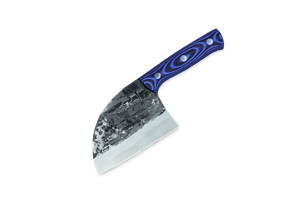
SAMURA chef knives are built for cooks who want that combination of distinctive design, confident ergonomics, and serious cutting character. Choose the blade that matches your routine, then protect its edge with a proper board, thoughtful storage, and regular sharpening.
The right knife should make you want to prep one more ingredient. That is a better test than any label, steel number, or showroom shine.


Leave a comment