

A fish dinner can go wrong before the pan is hot. Use a flexible fillet knife to cut through a fish head or rib bones, and the edge can chip, bend, or simply skid. A deba knife for fish is built for the moment when precision meets force: breaking down whole fish, separating heads, working around bones, and making clean portions without treating the blade like a cleaver.
This is a traditional Japanese fish knife with a serious job description. Its thick spine, tall blade, and weight-forward balance give it brutal character at the board, but it is not a general-purpose kitchen knife. Choose it for the right fish and technique, and it becomes a true workhorse. Choose it as a substitute for every knife you own, and its strengths quickly become limitations.
What a Deba Knife Is Designed to Do
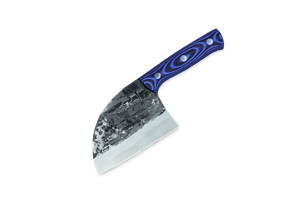
A deba is a Japanese-style knife made primarily for fish butchery. The blade is short, broad, and noticeably thicker than a typical slicing or fillet knife. Most traditional debas have a single-bevel edge, meaning one face of the blade is ground while the other is nearly flat. That geometry produces highly controlled, accurate cuts when used correctly.
Its main tasks are practical: removing the head, opening the belly, cutting through the collar, separating fillets from the frame, and portioning fish with small to medium bones. The heel of the blade supplies the force needed near the head and backbone. The thinner front section is used for more delicate work along the bones and skin.
A deba does not glide around pin bones like a flexible fillet knife. It works by placing the edge accurately, using deliberate downward cuts, and letting the blade’s mass do the work. That difference matters. A flexible blade follows curves. A deba creates controlled separation through firm structure.
Why a Deba Knife for Fish Has Such a Thick Blade
The thick blade is the deba’s defining feature. It resists twisting when you cut through the head joint or press down beside a backbone. It also adds stability when working with slippery whole fish, where a thin blade can feel nervous or overly flexible.
That thickness should not be mistaken for permission to chop indiscriminately. A deba is intended for fish bones and joints, not frozen fish, thick beef bones, lobster shells, or dense poultry bones. Even a powerful blade can chip if it meets hard material at the wrong angle. Think controlled pressure and a firm straight cut, not repeated hammering.
Traditional single-bevel geometry creates another advantage: it can make exceptionally clean cuts with less tearing in delicate flesh. The trade-off is that it asks more from the user. A right-handed deba is generally ground for right-handed use, and a left-handed cook needs a left-handed version for the same control. Using the wrong orientation can cause the knife to steer away from the intended cut.
Some modern Japanese-inspired fish knives use double-bevel edges. These are more familiar to cooks used to Western kitchen knives and easier to sharpen at home. They may not deliver the exact steering behavior of a traditional deba, but they are often the more practical choice for a home cook who processes fish occasionally.
The Right Deba Size Depends on the Fish
Blade length is not about status. It determines how comfortably the knife handles the fish in front of you. A compact 4.5- to 5.5-inch deba is agile around trout, mackerel, sardines, and smaller snapper. It offers excellent control when space is tight or the fish is narrow.
A 6- to 6.5-inch deba is the versatile middle ground for many home kitchens. It has enough blade height and weight for whole branzino, sea bream, bass, red snapper, and similar fish, while remaining manageable for detailed work. For larger fish, a 7-inch or longer blade gives more reach through the head and around a deeper frame.
Do not buy a larger deba solely because it looks more capable. A blade that overwhelms the fish is harder to control, especially when you are working close to the backbone. For most home cooks, a medium-size deba is the sensible starting point.
How to Use a Deba Without Damaging the Edge
Start with a stable board and dry the fish thoroughly. Moisture and fish scales make both the handle and skin slippery, so use a towel to keep your grip secure. A quality cutting board matters here: overly hard surfaces can shorten edge life, while a stable wood or knife-friendly composite board supports cleaner cuts.
To remove the head, locate the joint behind the gill plate rather than trying to split the hardest part of the skull. Set the heel of the blade into position and press straight down with controlled force. If the cut does not go through on the first attempt, reset the blade in the same line instead of twisting it sideways.
When filleting, use the front half of the blade to trace the backbone. Keep the blade angle shallow and make short, confident strokes. Let the flat side of the knife ride against the bones to preserve more flesh on the fillet. Once the fillet is free, a narrower slicing knife may be better for skinning or trimming because it can make long, smooth passes with less resistance.
The common mistake is using a deba like a rocking chef’s knife. Avoid rocking, prying, or dragging the edge sideways across bones. A deba rewards direct cuts. For vegetables, herbs, and everyday prep, a chef knife or Santoku is the better partner because each blade is shaped for that faster, more repetitive work.
Deba vs. Fillet Knife: Do You Need Both?
It depends on how you buy fish. If you regularly bring home whole fish and want to break it down yourself, a deba gives you far more confidence around heads, collars, and frames than a thin fillet knife. It is the stronger first tool for whole-fish prep.
If you usually buy already-filleted salmon, cod, or tilapia and only need to remove skin or trim portions, a flexible fillet knife is more efficient. Its thin blade follows the contours of the fish and wastes less flesh during skinning.
For cooks who do both, the two knives are complementary. Use the deba to handle the structural work, then switch to a slicing or fillet blade for fine trimming. This is not duplication. It is using the correct geometry at each stage.
Sharpening and Caring for a Deba
A deba should be sharp, but not sharpened carelessly. Traditional single-bevel knives require attention to the primary bevel and the nearly flat back side, known as the ura. Removing too much material from the back can alter the blade’s geometry and reduce its performance.
A sharpening stone gives the most control for this work. Sharpen the beveled side at its existing angle, using light and consistent pressure, then lightly deburr the back rather than grinding it aggressively. If you are new to single-bevel knives, take your time. The goal is to maintain the original shape, not create a new edge profile.
After use, wash the knife by hand, dry it immediately, and store it where the edge cannot strike other tools. Do not leave it in a sink or dishwasher. Carbon steel versions need especially careful drying and may develop a patina over time. That darkening is normal, but orange rust is a warning sign that moisture has been left on the blade.
A knife block, blade guard, or magnetic holder can protect the edge when used properly. What matters is that the blade is clean, dry, and not rubbing against other metal utensils between uses.
Who Should Choose a Deba?
A deba makes sense for the cook who wants whole fish on the menu more often: market-fresh trout, mackerel, snapper, sea bass, and similar fish that benefit from being broken down just before cooking. It also makes a strong gift for an experienced cook who already owns the standard kitchen essentials and wants a specialized tool with real purpose.
It is less suitable as a first and only knife. A versatile chef knife handles more daily tasks, from onions and herbs to boneless meat and fruit. But once whole-fish preparation becomes part of your cooking routine, a deba earns its space quickly.
Buy the size that matches the fish you actually cook, keep the edge precise, and use measured force instead of brute impact. The reward is cleaner fish, better yield, and the kind of control that makes a whole catch feel far less intimidating.


Leave a comment